Business
South, Southwest Suburban Cook County Homeowners See Largest Property Tax Increase in 30 Years: Study
 (WTTW News)
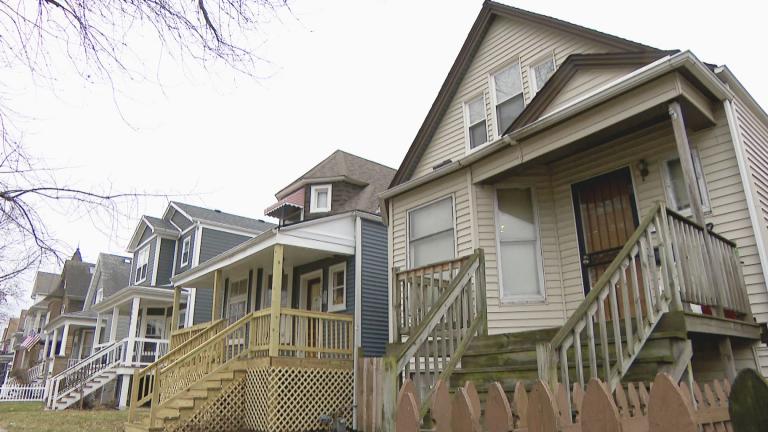
The median homeowners in Cook County’s south and southwest suburbs saw their property tax bills rise nearly 20% this year, according to a study released Thursday from Cook County Treasurer Maria Pappas’ office.
That is the largest percentage increase in at least 30 years, according to a new analysis from county Treasurer Maria Pappas’ research team.
In 15 suburbs, of which all but two towns are home to a majority of Black residents, the increases were even bigger, with residential property taxes soaring at least 30%, according to the new analysis.
In two of those towns — Dixmoor and Phoenix — the median tax bill more than doubled, according to the analysis.
“Many homeowners are going to be shocked and angry when they get their bills,” Pappas said in a statement. “South suburban homeowners already pay some of the highest property taxes in the county, and these increases will make paying those bills even more difficult.”
Residents of the south and southwest suburbs already pay the highest tax rates in Cook County, making the increases harder for many homeowners to handle. For example, a homeowner in Ford Heights pays more than four times as much in property taxes as the owner of a similarly valued home in Chicago, according to the analysis.
The median property tax bill in Cook County’s south and southwest suburbs is now $6,117, according to the analysis.
The bills reflecting the second installment of the 2023 property tax bills will be available starting July 2, and must be paid by Aug. 1.
The massive increase follows the reassessment of the value of all properties in the south and southwest suburbs. Cook County Assessor Fritz Kaegi recalculates the value of every property in the county every three years.
Kaegi, who is serving his second term as assessor after being reelected in 2022, has vowed to more accurately pinpoint the value of commercial properties to ease the size of property tax burden on homeowners.
But that effort has been largely thwarted by the Cook County Board of Review, a government agency made up of three elected commissioners, which frequently rules in favor of commercial property owners who object to Kaegi’s determination of their properties’ value, reducing their tax bills.
The reassessment of properties in the south and southwest suburbs shifted 4% of the total tax burden in that region from businesses onto homeowners, according to the analysis.
That helped fuel the largest tax hikes in more than a generation in the south and southwestern suburbs by forcing homeowners to pay more because commercial property owners paid less, according to the analysis.
The reassessment also removed adjustments Kaegi’s office made in 2020 to reflect the economic damage caused by the COVID-19 pandemic. The massive increases were a result of the combination of higher housing prices and the Board of Review’s decision to reduce the value of commercial properties.
The Cook County Board of Review shaved more than 21% off the total assessed value of commercial and industrial properties whose owners objected to their properties’ assessments, while reducing the total value of residential properties by approximately 4.4% in response to appeals, according to the analysis.
Property taxes fund a host of critical public services, including schools, park districts and libraries. Individual bills are calculated based on the tax levies set by government agencies and how the assessed value of the property changed, as compared with other properties in the area.
Residents of Chicago are set to see increases of 2.6% on their 2023 property tax bills, fueled by increases approved by the Chicago Board of Education and for properties within Tax Increment Financing districts, areas considered to be blighted by officials, according to the analysis.
In all, property taxes across Cook County rose approximately $706 million, to $18.3 billion, according to the analysis. That’s 4% higher than in 2023, and in line with the 4.1% rate of inflation for 2022.
More than 86% of that increase will be paid by homeowners, who must pay nearly $611 million in new taxes, according to the analysis.
The increases for south suburban residents come after slightly smaller, but still significant increases, hit homeowners in Cook County’s north and northwest suburbs, where the median property tax bill jumped 15.7% in 2022, according to the treasurer’s office.
In 2023, property tax bills in the north and northwest suburbs are set to rise 3.2%, according to the analysis.
Contact Heather Cherone: @HeatherCherone | (773) 569-1863 | [email protected]